.png)
Is Mutual Fund Distribution a Profitable Business in India? (2026 Guide)
The mutual fund distribution business in India is quietly one of the most scalable, low-capital financial services opportunities available today. But is it truly profitable or just a volume game with razor-thin commissions? Here's the real picture, and most people get this wrong. They look at the trail commission - 0.5% to 1% and think: "This looks thin, how can I build a sustainable income?”
They forget one thing: that percentage applies to every rupee you've ever helped invest. Every single month. Forever. That's not a commission. That's simply compounding the income model. In this blog, we break down the real economics of mutual fund distribution along with industry data, and answer the most searched questions MFDs and aspiring distributors ask.
Industry Snapshot: Mutual Fund Distribution in India (2026)
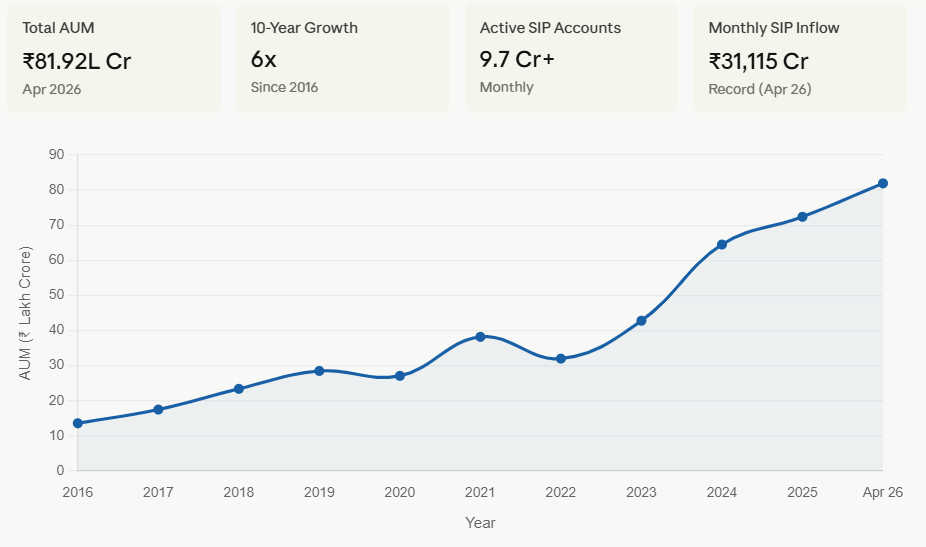
The Math That Changes Everything
India's mutual fund AUM has crossed ₹73.73 lakh crore as of March 2026, a 6x jump in 10 years. The industry has nearly doubled in just the last 2 years alone.
Here's what that trail commission actually means at scale:
- ₹10 crore AUM → ₹5–10 lakh/year in trail
- ₹25 crore AUM → ₹10–20 lakh/year in trail
- ₹100 crore AUM → ₹40–80 lakh/year in trail
- ₹500 crore AUM → ₹2–4 crore/year in trail
And here's the part no one talks about: you earn this even if you add zero new clients, as long as markets grow and your SIP book stays intact. A ₹10 crore book built today could become ₹25 crore in 5 years purely from market appreciation. No new clients. No extra effort. Just compounding does its job for you, not just your investors.
5 Reasons MFD Business Wins
1. SIP: The Recurring Revenue Engine
Monthly SIP contributions hit a record ₹32,087 crore in March 2026, up 20% YoY across 55 consecutive months of positive inflows. This isn't a trend. It's a structural shift in how India saves. Every SIP you register is a recurring revenue stream that builds your AUM on autopilot. 500 SIPs of ₹5,000 each = ₹25 lakh/month in consistent new inflows every month, without picking up the phone.
2. Capital Light, Relationship Heavy
Mutual fund distribution involves zero capital or inventory. No capital risk. No trading float. Just an ARN, compliance, and the ability to earn trust. Distributors with deep client relationships have near-zero churn, zero marginal cost of retention, and no competition that can copy their relationships. That's an asymmetric business. Very few industries offer it.
3. Small Cities Are the Real Gold Rush
Currently, in India, the top 5 metros hold 57% of total MF AUM. That means a substantial share of India's mutual fund wealth is held in cities that most MFDs are not exploring.
The data is decisive:
- B30 (Beyond Top 30) AUM = ₹14.50 lakh crore (Sept 2025), growing at 21% CAGR since 2019
- 28% of individual MF assets are from B30 as of Sept 2025
- 15% YoY growth in B30 cities
- 50%+ of all new investor folios now come from small cities
- 86% of the assets from B30 locations are in equity schemes, the sticky, long-term category
An MFD who dominates one mid-size city, e.g. Indore, Rajkot, Coimbatore, Lucknow with 500 quality client relationships can build ₹200+ crore AUM with a fraction of the competition pressure of any metro.
4. The Industry Tailwind: Structural, Not Cyclical
Mutual funds' share in Indian household savings has risen from 7.6% in FY21 to 15% in FY25 and is climbing. Active SIP accounts have crossed 9.7 crore. India's median age is 28. The next 20 years of wealth creation are just beginning. You are not late. You are right time and at the right place, ready for the next wave.
5. Organic Growth via Referrals
Once you establish your identity and practice as MFD, 60–70% of new AUM comes from referrals, meaning your cost of growth is nearly zero, just as your income is compounding the fastest. The additional effort diminishes over years as your expertise, AUM, and clientele grow.
Where Most MFDs Quit And Why the Best Don't!
The first 2-3 years in MFD practice can be hard. Low AUM means low trail. You'll be doing full-effort work to build your book, add new clients, and learn the ropes. But every MFD who has crossed ₹25 crore AUM will tell you the same thing: the business changes character at that point. Trail income starts covering costs. SIPs keep compounding. Referrals come inbound. The most successful distributors today didn't win by being the smartest in the room. They won by consistently staying in the room, remaining compliant and patient, for 10 to 15 years.
Is It Lucrative?
Yes, MFD is a rewarding and lucrative career option, if you think in decades, not quarters.
This is one of the rare financial businesses in India where:
✅ Near-zero capital to start
✅ Income grows passively as markets rise
✅ Relationships are your moat, not algorithms
✅ SIPs create recurring, predictable cash flow
✅ Small city opportunity is wide open and underserved
✅ Your AUM book has real exit value
The industry is ₹80 lakh crore and growing. The SIP habit is building long term growth participation. The Tier-2 opportunity is untapped.
The only question is: are you willing to play the long game?
Become a Mutual Fund Distributor with AssetPlus Academy. Join our FREE NISM V-A training programs with industry experts. Register Now.
Frequently Asked Questions
Q1. How much does a mutual fund distributor earn in India?
A mutual fund distributor’s income depends largely on the AUM they manage. At ₹15 crore AUM, monthly trail income can range from ₹5-10 lakh annually, while ₹100 crore AUM can generate ₹40-80 lakh per month through recurring commissions.
Q2. Is mutual fund distribution profitable for beginners?
Mutual fund distribution is a long-term business model. The initial years require consistent effort, but once AUM reaches ₹20–25 crore, recurring trail income typically makes the business financially sustainable and scalable.
Q3. What is trail commission in mutual funds?
Trail commission is recurring income paid by AMCs to distributors as a percentage of the assets they manage. Since it is linked to AUM, earnings grow steadily as SIPs accumulate and markets appreciate over time.
Q4. What is B30 AUM and why is it important?
B30 refers to cities beyond India’s top 30 mutual fund markets. These regions are witnessing rapid investor growth, making them one of the biggest opportunities for MFDs due to lower competition and rising financial awareness.
Q5. MFD vs RIA - which model is more profitable?
MFDs earn recurring trail commissions and can serve a wider retail audience, making the model highly scalable. RIAs charge advisory fees and cater to a more niche segment, often making the MFD route more commercially viable at scale.
Q6. Can mutual fund distributors build passive income?
Yes. The MFD model is built around recurring trail commissions, allowing distributors to earn ongoing income from existing AUM even without adding new clients every month.
Related posts
.png)

.png)
Become a Mutual Fund Distributor
Build a thriving career as a Mutual Fund Distributor with AssetPlus Academy’s expert-led training and mentorship.

